

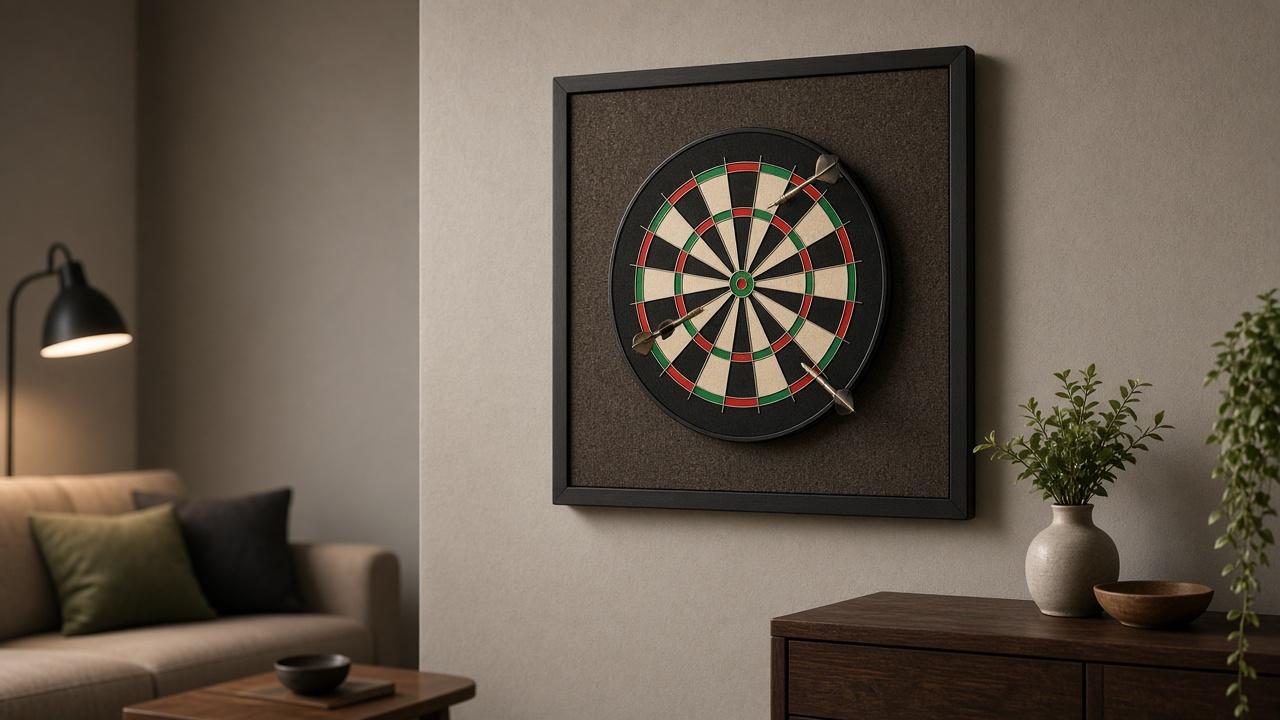
A stable board at home frees you from opening hours. Mount it wrong and distances lie, and rebounds become a hassle.
Key measurements (steel-tip)
- Bull height: 1.73 m from floor to centre of bull
- Throw line: 2.37 m from the front of the board to the oche
- Diagonal check: often ~2.93 m from bull to oche
Soft-tip rules can differ by federation. For league-style training, use steel measurements.
Setup checklist
- Check the wall (anchors, no thin drywall without reinforcement)
- Surround or protection for wall and darts
- Non-slip oche marking
- Light without glare or hard shadows on the bed
- Clear space left and right for your stance
Gear worth buying
- mat for bounce-outs and floor marks
- spare flights and stems
- scoreboard or app for average tracking
Use home practice well
Short, focused blocks beat endless matches. Start with Darts training for beginners and training drills.
When a venue is better
Try new boards, match atmosphere, social rounds. Find places under darts venues.
Room layout tips
Leave space behind the oche for follow-through. Avoid tight corridors where people walk behind you. If family or pets share the room, agree clear “do not cross” moments while someone throws.
Ceiling height rarely blocks steel play, but low lamps and hanging plants do. Move obstacles before you mount, not after the first bounce-out.
Maintenance
Rotate the board when segments wear. Tighten mounting screws every few months. Replace flights and points before they snap mid-session. A well-kept home setup matches what you find at better venues.
Neighbours and noise
Rubber mats and surrounds cut wall impacts. Choose practice times that respect neighbours in flats. Soft-tip can be an option where steel noise is sensitive, but train on steel measurements if your league uses it.
FAQ
Sharing the board with family
If others throw too, mark a simple rota and keep a spare set of lighter darts for guests. Teach the same safety rules youth clubs use. See Youth darts training if children play.
Conclusion
Mount to spec, fix light and surround, then train with structure. The board is the stage; the training plan drives progress. Need feedback on throw mechanics? Compare darts coaches for occasional technique checks.