

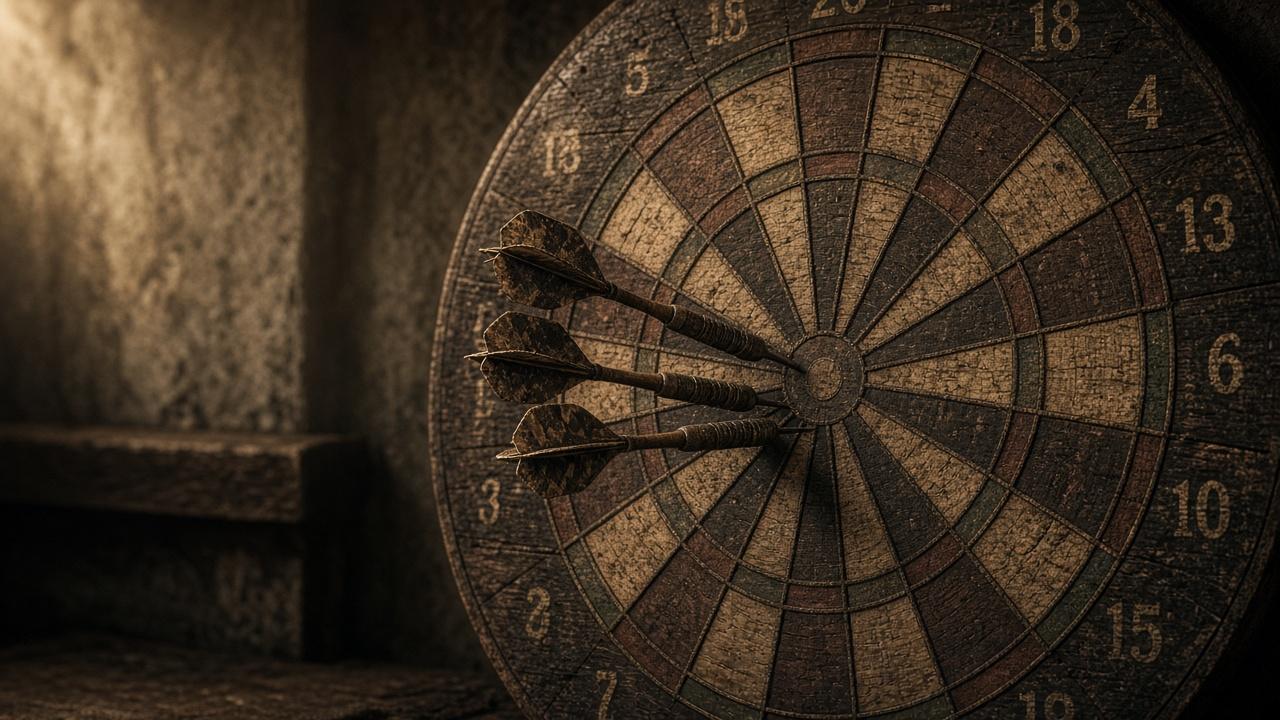
Darts is a global precision sport with arenas, streaming, and millions of viewers. The roots are far from world-final stages: military pastime, British pub culture, and gradual standardisation.
Early origins
In the Middle Ages soldiers practised with shortened arrows on wood slices or tree sections. Rules were loose. Growth rings on later wooden boards shaped the look of modern segments.
Pub culture in England
In the 19th century darts spread in English pubs. Wooden boards wore out quickly. Sisal later became the steel standard and still dominates today.
Number layout and rules
The familiar number ring is often linked to Brian Gamlin. High values sit beside low ones. Misses hurt; precision pays. Unified competition rules followed.
Skill or gambling?
In 1908 an English court ruled in favour of skill. Darts could stay legal in pubs. That accelerated growth.
Federations and pro sport
- BDO (1973) and WDF (1976) organised international play
- the PDC later built a professional, media-led system
Tournaments, rankings, and prize money professionalised the sport.
Television and event culture
From the late 1990s, especially the 2000s, TV turned darts into a spectator sport. Atmosphere, commentary, and arena events drew new fans.
Development in Germany
From the 1980s the amateur and pub scene grew. TV success brought clubs, leagues, and sold-out events. Today you can find local clubs, venues, and tournaments on MyDartTrainer.
What this means for players
History explains why steel and soft-tip coexist, why doubles decide matches, and why technique matters so much. Starting today? Use the beginner guide and find a coach when you want feedback.
Women’s and youth growth
Modern tours and federations invest more in women’s fields and junior pathways. Local clubs mirror that with youth nights and mixed leagues. History keeps moving; today’s pub player can be tomorrow’s league regular with structured training.
Playing today with historical context
Steel remains the reference for most European league play. Soft-tip grew with electronic boards and different scoring apps. Knowing both explains why venues list mixed equipment. Pick training that matches the events you enter.
Conclusion
Darts moved from informal throwing to organised competition. Standardisation, law, federations, and media drove change. The game stayed accessible: one board, one line, three darts. Start your own chapter with training for beginners or explore coaches when you want guided progress.